A Deep Rift in the Israeli Society and Warnings of Civil War
Even before the Al-Aqsa Flood operation on October 7, 2023, and with the advent of the current fascist right-wing government—comprising the far-right bloc, as well as the religious right in its two factions: the religious-national (Jewish Power and Religious Zionism parties) and the ultra-Orthodox religious (Shas for Sephardim and United Torah Judaism for Ashkenazim)—Netanyahu and his fascist allies began a systematic effort to dismantle what they called the "deep Entity." According to the right-wing, this "deep entity" is controlled by the Israeli left.
The right believes that over the past decade, despite their electoral victories, they have not been able to fully exercise power. The actual authority, they argue, remains in the hands of leftist remnants, particularly within the judiciary (notably the Supreme Court), the security apparatus (both the internal Shin Bet and the external Mossad), and the military.
Prior to the Al-Aqsa Flood, the government initiated a series of changes aimed at the Supreme Court by passing laws to alter the composition of the committee responsible for appointing justices to the Court. These moves triggered massive protests, forcing Netanyahu and his coalition partners to proceed cautiously while awaiting a more favorable moment.
Now, more than a year after the genocide against Gaza and amidst the Israel society's preoccupation with the aftermath of the war and the shock of October 7, Netanyahu has seized the "historic moment" he had been waiting for. He has resumed his push for a series of measures that resemble a coup against the institutions of the entity, including:
• Forcing former Chief of Staff Herzi Halevi to resign and appointing Eyal Zamir, aligned with the right, as his successor, along with a deputy also from the right-wing faction.
• Dismissing Ronen Bar, head of the Shin Bet (internal security).
• Moving toward the dismissal of the government’s legal advisor, who has been a significant obstacle to many of Netanyahu’s “coup-like” initiatives and is viewed by right-wing parties as aligned with the left.
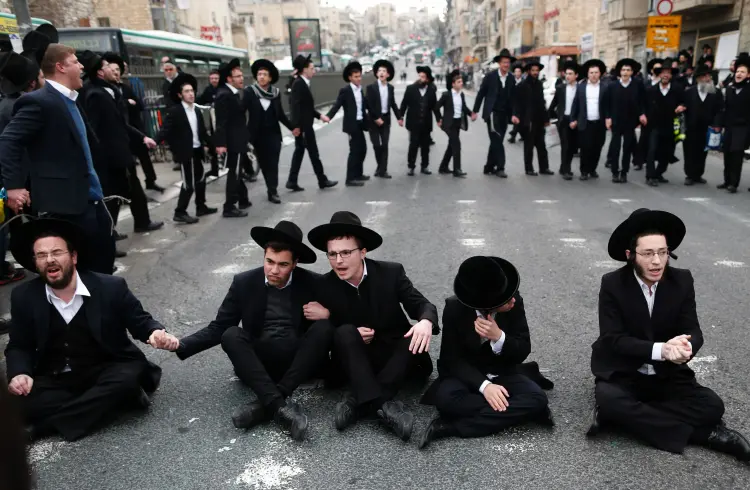
• Advancing legislation to exempt members of the ultra-Orthodox religious parties (Shas and United Torah Judaism) from military service.
• Working to pass laws in the Knesset that would help Netanyahu evade corruption charges he faces in court, including fraud, bribery, and nepotism.
It is worth noting that the dismissal of the Shin Bet chief and the forced resignation of the Chief of Staff are also part of an effort to shift blame for the October 7 failure onto the security establishment and exonerate Netanyahu personally from accountability—potentially protecting him from criminal charges.
These controversial policies, particularly exempting the ultra-Orthodox from military service, altering the committee for appointing Supreme Court justices, and appointing loyalists within security institutions, have caused a profound rift within Israeli society. This divide is growing between the ruling right-wing coalition and left, centrist, and moderate-liberal forces.
The situation has led to widespread protests, which may continue to escalate until Netanyahu and his allies retreat from some or all of these measures—or until the government resigns, prompting new elections.
Political, media, and academic elites have warned of the risk of civil war within Israeli society due to Netanyahu’s policies aimed at reshaping the entity’s institutions. While such warnings may seem exaggerated at this stage, these measures will undoubtedly deepen divisions and expand the scope of opposition. This could lead to broader participation in protests with the aim of overthrowing Netanyahu and his government.
The Israeli Right Seeks a Bloodless Coup Against the Entity’s Institutions
Mar 25, 2025 05:09 pm