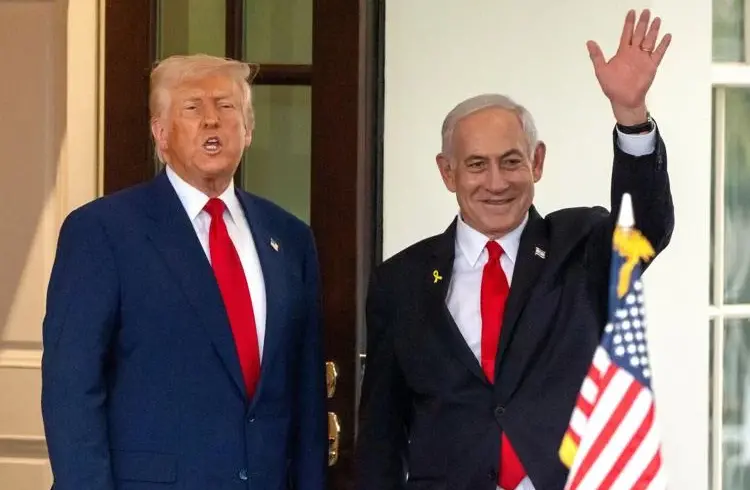
The Israeli political leadership was surprised by the response of Hamas and the Palestinian resistance factions to the “Trump-Netanyahu” plan to end the war.
Hamas’ response, which was formulated following consultations and advice from Turkey, Egypt, and Qatar, is based on the following principles:
- Agreeing to matters directly related to Hamas, including the issue of Israeli captives in Gaza, abandoning power, rejecting the displacement scheme, preventing the annexation of the West Bank or any parts of the Gaza Strip, and allowing the entry of humanitarian aid.
- Referring the broader issues—governance, Gaza’s future, and the resistance’s weapons—to the Palestinian national movement as a whole, including all its factions, Hamas among them.
- Addressing the U.S. president in a tone he appreciates—speaking in a language he wants to hear and focusing on the factors that concern and interest him.
- Avoiding phrases such as “rejection,” “reservation,” or “unacceptable,” so that they are not used by Netanyahu or even Trump as pretexts to evade or renounce commitments.
It is likely that the first phase of the deal will be implemented, involving the release of Israeli captives in exchange for 250 Palestinian prisoners serving life sentences and another 1,700 detained after October 7, alongside an increase in humanitarian aid, the reopening of the Rafah crossing in both directions, and possibly the announcement of a technocratic government tasked with temporarily administering Gaza—bringing an end to the current phase of the genocidal war.
However, Netanyahu is unlikely to proceed with the full implementation of the three-phase agreement. He will most likely invoke the issue of the resistance’s weapons as a pretext to act as he pleases, though without returning to the previous large-scale form of genocide. This would include:
- Avoiding a full withdrawal from Gaza and maintaining a presence in certain areas designated as “security zones.”
- Conducting targeted assassinations, particularly of resistance fighters who participated in the October 7 operation or those attempting to revive armed resistance in Gaza.
- Delaying the reconstruction process as long as possible.
The time limit for all these measures is likely tied to the current Israeli government, which is not expected to remain in power after next year’s elections. All indicators suggest that the opposition parties—along with a right-centrist party led by former Prime Minister Naftali Bennett—are likely to form the next government.
Netanyahu desperately needs to win the upcoming elections by any means possible, as victory remains his only escape from corruption trials, from the establishment of an official inquiry into the “October 7 events,” and perhaps his only guarantee against imprisonment.
Therefore, the war will continue—but in different, limited forms, less brutal and less bloody. Netanyahu may even seek to ignite new regional conflicts to divert attention—possibly with Iran or Hezbollah.
Hamas’ Response to the Trump-Netanyahu Plan
Oct 05, 2025 03:25 pm