
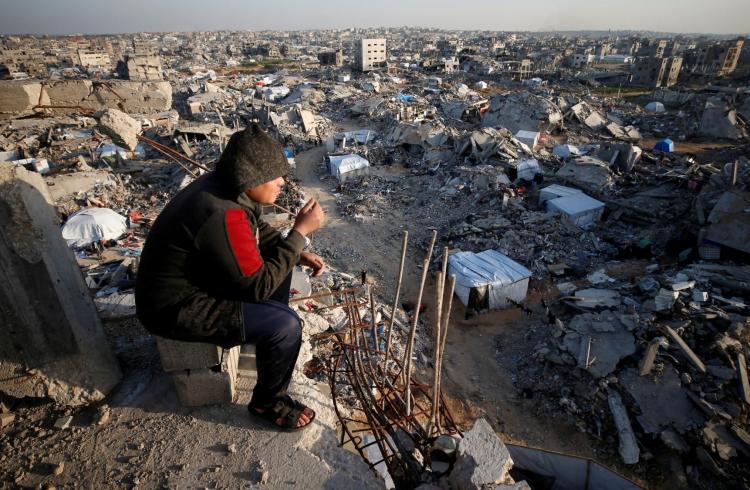
Just as Netanyahu has been doing since October 7, 2023—persisting in wars, igniting tensions, and driving new regional crises—he is currently seeking to remain in the first phase of the ceasefire, maintaining the status quo and keeping the Israeli army in control of roughly half of the Gaza Strip. By doing so, he prioritizes prolonging the lifespan of his governing coalition for as long as possible, potentially until the next elections in October 2026, and sustaining a state of war either in Gaza, the West Bank, or even the wider region by provoking new conflicts.
However, it is difficult for Netanyahu at this stage to resume the war in Gaza as he desires, for several reasons:
First: The U.S. administration still relies on Trump’s 20-point plan and seeks to move to the second phase, which requires withdrawing to the “red line” near Gaza’s borders, deploying international forces, and forming a transitional government headed by what is called the “Peace Council”—which would effectively act as a mandate authority if the agreement advances. This would pave the way to expanding the “Abraham Accords” and bringing more Muslim countries into the normalization framework.
Second: There is strong international opposition to resuming the genocide, along with a global public opinion that is firmly against the occupation and ready to take to the streets again—this time with even larger crowds and wider popular mobilization.
Third: The Israeli army is still suffering from the consequences of the war, and the economy cannot support a new adventure in Gaza that would require mobilizing ground forces, armored units, and reservists.
Added to this, Netanyahu is currently enthusiastic about shifting focus to the Lebanese front, aiming to destroy Hezbollah’s missile capabilities—which the war cabinet claims are being rebuilt—or turning toward Iran to complete the destruction of its nuclear program, or even toward Yemen to strike the Houthis, or toward Iraq to confront popular mobilization forces.
In sum, Netanyahu is eager to return to killing and destruction and to maintain the first phase of the ceasefire while continuing to occupy half of the Gaza Strip. However, U.S. interests and international desire to prevent a renewed genocide may obstruct his ambitions. Yet, the first phase may last longer, the severity of the Gaza blockade may ease, and the Israeli army may continue to be gradually exhausted through very limited military operations.