
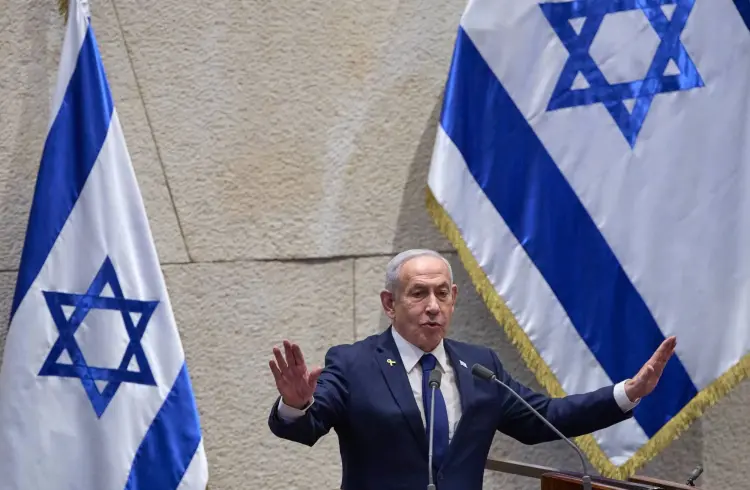
Despite Netanyahu and his coalition partners’ desire to avoid another withdrawal, the U.S. administration is pushing to move into the next phase. The expected steps of the agreement over the coming two months—most likely in January 2026—are as follows:
1. Affirming the role of the “Civil–Military Coordination Council,” headquartered in Kiryat Gat near the Gaza Strip, as a central body for monitoring the ceasefire, coordinating on-the-ground activities, overseeing humanitarian aid, and expanding its authorities until a technocratic government or the so-called “Peace Council” is formed.
2. Issuing a UN Security Council resolution to establish international forces and authorize the “Peace Council”—to be chaired by Trump himself—to supervise and oversee these forces on the ground.
3. Forming the international forces and beginning their deployment in Gaza, likely during the first or second month of the coming year at the latest.
4. Gradually lifting the siege on Gaza and allowing more humanitarian aid and other non-food, non-medical supplies to enter, until the technocratic committee or a government of experts assumes responsibility in Gaza.
And so that we do not become overly optimistic, the main objective of the international forces will be to oversee what is referred to as the “disarmament of Hamas” and other factions, to secure the settlements near the Gaza border, and to prevent the resistance from rearming. They may also support the Palestinian security forces tasked with enforcing security and confronting Hamas and the resistance factions—this, from the Israeli and American perspective.
Within this context, there are two major variables that will significantly influence progress toward implementing the agreement:
First: The stability of the regional and international environment in the near term—something currently absent due to the possibility of a new war in Lebanon, a confrontation with Iran (whether large or limited), or even political shifts within the United States itself.
Second: The outcomes of the Israeli elections—whether held on schedule in October 2026 or earlier. It is nearly impossible for Netanyahu to form the next government. A government led by former Prime Minister Naftali Bennett is more likely—one that would be less extreme and more aligned with the U.S. administration and Western governments. A repeat election within six months is also possible if no party succeeds in forming a stable coalition.
In this complex reality, the role of the Palestinian resistance becomes crucial: to minimize losses and maximize gains, to reassess strategies in the coming phase, and to consider adopting forms of peaceful resistance that align with the evolving political landscape in Gaza.